
The Food Trailer Was Complete. The Compliance Work Wasn’t.
An overseas supplier’s assurance of Australian compliance was only the beginning.
Based on actual client experience. Identifying details and some circumstances have been adapted.
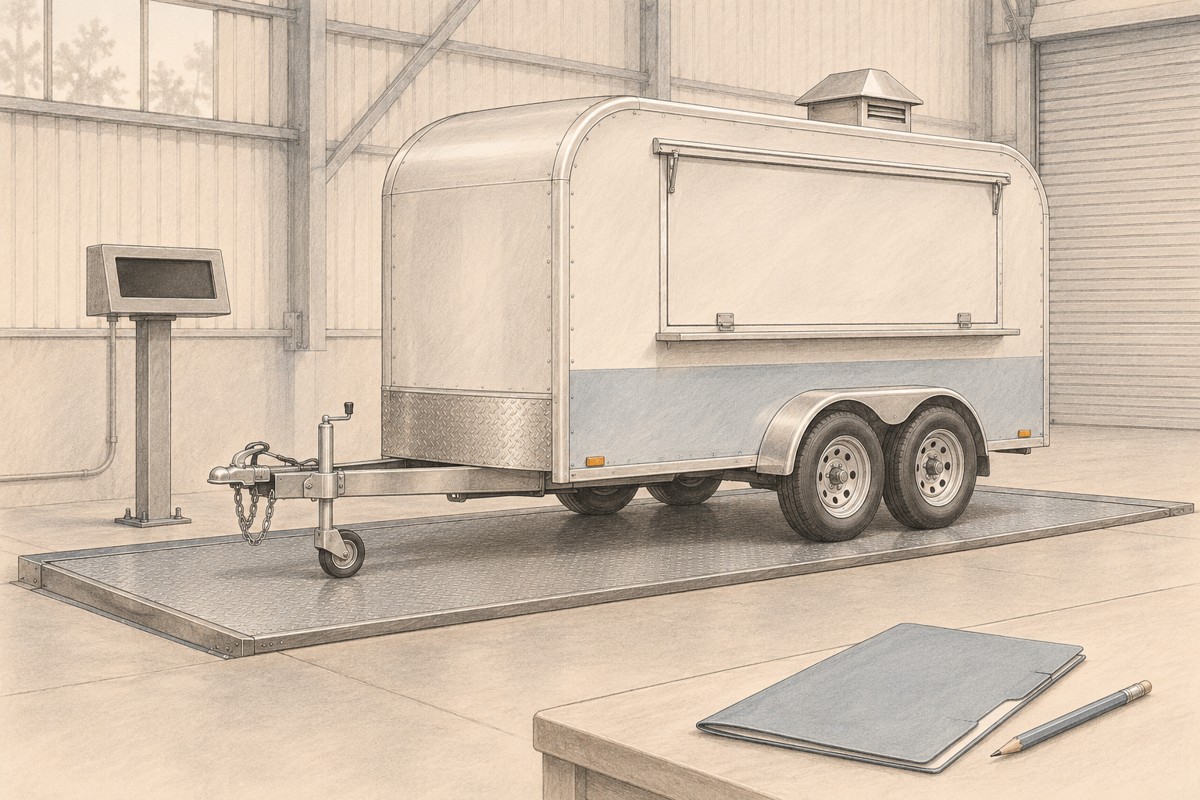
A business idea, a complete trailer and a reassuring promise
The customer ordered a fully fitted food trailer from an overseas manufacturer. The attraction was straightforward: purchase a complete commercial kitchen on wheels and get the business moving.
The customer understood that the supplier’s trailers met Australian compliance requirements. With the equipment installed and the trailer complete, the remaining approval and import arrangements appeared to be the final administrative steps.
Then the weight figures came under scrutiny.
The numbers described different trailers
The information supplied did not consistently describe the trailer in its completed configuration.
Some figures related to the trailer without its kitchen equipment. Others confused the trailer’s measured weight with its maximum permitted mass. These differences mattered because the customer was importing a complete food trailer, including its fitted equipment.
When evidence of the actual tare mass was requested, obtaining a clear weighbridge record and resolving what had been weighed took repeated follow-up.
The confirmed tare was higher than the ATM originally supplied for the application.
That meant the completed trailer, before carrying its operating load, already exceeded the maximum mass previously declared.
Changing a number would not solve the problem
Increasing the stated ATM could create room on paper. It would not establish that the trailer could safely support the higher rating.
The corrected mass basis brought the brakes, safety chains, coupling and other weight-related components into focus. Their suitability had to be established against the trailer’s intended operating mass. Any component unable to support that basis would need upgrading.
The relationship between tare, GTM and ATM also needed to make sense for the complete trailer. A weighbridge result establishes a measured weight; it does not, by itself, establish the trailer’s permissible ratings.
For the customer, an apparently simple approval task had become a question about the trailer they had actually purchased.
Bringing the application back onto a supported basis
ROVER Pro worked through the conflicting information, followed up with the manufacturer and reconciled the mass figures with the completed trailer.
The work moved beyond collecting documents. It required resolving whether the information supported the trailer being presented for approval—and identifying where further confirmation or corrective work was needed.
The corrected application subsequently received concessional RAV entry approval.
That approval was a significant milestone. Registration and any applicable inspection requirements remained separate steps.
What another importer can learn from this
A trailer can look complete while important compliance questions remain unresolved.
For a food trailer, fitted equipment can make a substantial difference to tare. The remaining carrying capacity must then accommodate what the business needs to operate: stock, water, gas and other loads, as applicable.
An attractive purchase price and a supplier’s assurance do not resolve those questions. Discovering the problem after manufacture can mean extra evidence, component changes, delays and costs that were absent from the original budget.
The best time to investigate is while you still have choices about the trailer’s specification and purchase.
Planning to import a food trailer?
Speak with ROVER Pro before committing to the order—or as soon as concerns arise with a trailer already purchased.
We help identify the approval pathway, challenge inconsistent information and manage the work needed to move the application forward.
Read our whitepaper on importing a single trailer into Australia, or contact ROVER Pro to discuss your proposed import.
Each trailer and approval application requires individual assessment. This case study does not establish the suitability or compliance of another vehicle.