
ARTICLE · FOOD-TRAILER IMPORTS · 3 MIN READ
Will Your Food Trailer Have Enough Payload Left to Trade?
The kitchen may be complete—but can the trailer carry what your business needs?
The layout works. The equipment list looks right. The supplier can deliver a complete food trailer at an attractive price.
Before placing the order, there is another question to answer:
Once the kitchen is fitted, what capacity remains for the things you need to trade?
Food, drinks, packaging, water, gas and operating supplies all belong in the business plan. They also belong in the conversation about the trailer’s weight.
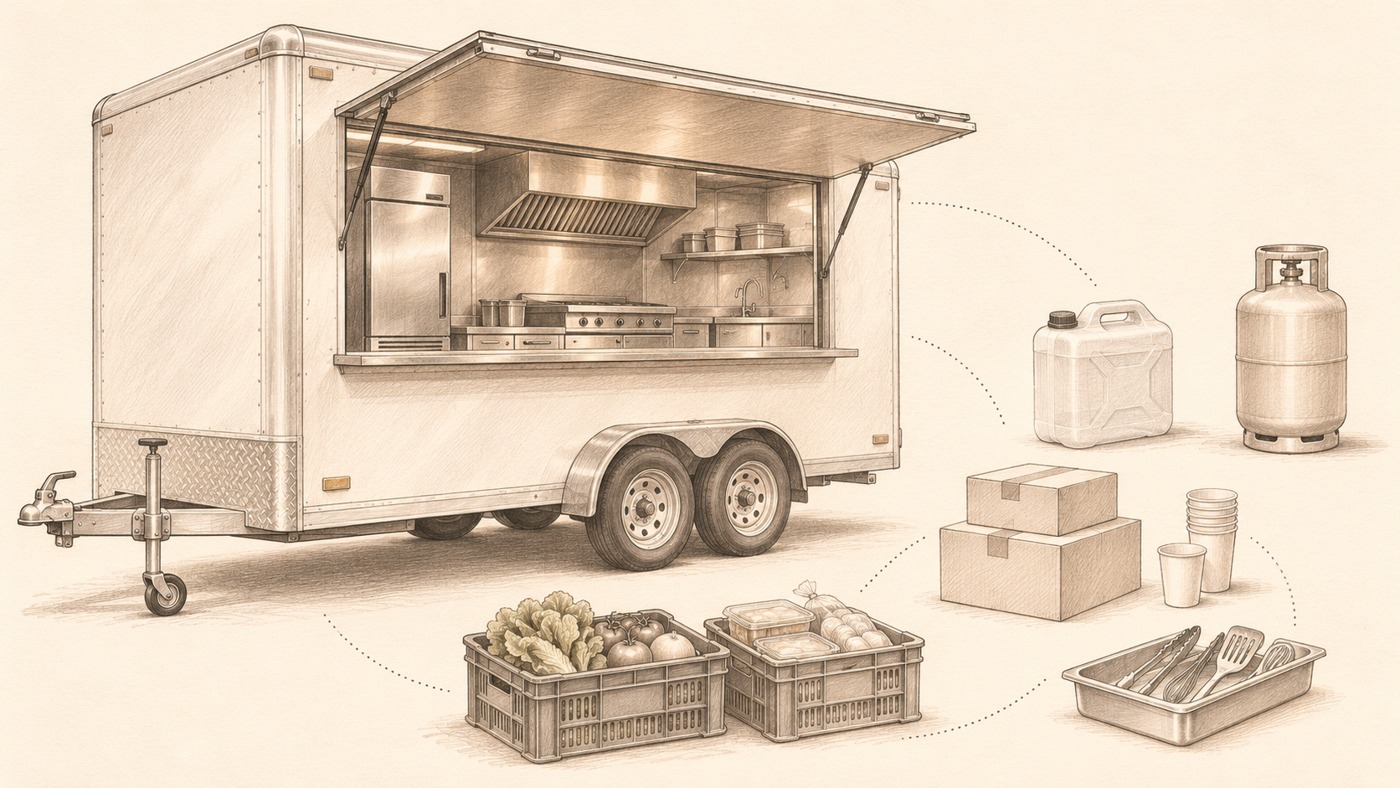
Start with the trailer you will actually use
A weight quoted for a basic trailer body may tell you little about the completed kitchen.
Benches, refrigeration, cooking appliances, extraction, plumbing and electrical equipment can change the picture considerably. Equipment supplied separately for installation also needs to be reconciled with the completed specification.
An item appearing in the purchase price does not establish that its weight was included in the supplier’s quoted figure.
The starting point should be a clear understanding of what the stated weight represents—not an assumption that “fully fitted” and “weight confirmed” mean the same thing.
Think beyond an empty kitchen
Imagine preparing for your first busy event.
The fridges need stock. You need ingredients, serving containers, cleaning supplies and utensils. Depending on the setup, you may also need to carry water, gas and portable equipment.
Water and gas need a stated basis: what is already included in the recorded weight, and what still needs an allowance? Leaving something out creates a misleading picture; counting it twice does too.
The important commercial question is whether the trailer can support a realistic trading day, including the loads carried on the journey there and back.
A trailer that only works with an impractically small operating load may be the wrong purchase for the business.
A bigger number does not create capacity
ATM and GTM are manufacturer-specified ratings. A weighbridge measures weight; it does not establish those ratings.
A proposed increase needs a supported basis for the trailer and its relevant components. It cannot be settled by changing a plate or application figure alone. Department trailer guidance—VSB1.
Discovering a shortfall after manufacture can leave difficult choices: reduce equipment, change the specification, investigate upgrades or reconsider how the business will operate. Each can affect the original budget and timetable.
Include the towing arrangements
Moving supplies into the towing vehicle is not an automatic solution. That vehicle has its own limits, and passengers and equipment also contribute to its load.
The trailer, towing vehicle and connection need to be considered together for the intended journey. Queensland’s guidance expressly includes passengers, equipment, modifications and trailer supplies in that assessment. Queensland Government towing guidance.
Resolve the question while you still have choices
The best time to examine operating capacity is before the specification is locked in.
ROVER Pro can review the proposed trailer, challenge unclear mass information and help establish what needs to be resolved before you commit. Where engineering or other specialist input is required, we can coordinate the appropriate assistance.
Before paying a deposit, let us help you understand whether the proposed trailer suits the business you intend to run.
Discuss your proposed food-trailer import with ROVER Pro.
For a practical example, read The Food Trailer Was Complete. The Compliance Work Wasn’t. Unfamiliar terminology? Search our Glossary, Abbreviations and Definitions.
General information for proposed food-trailer purchases and imports. The appropriate mass basis, ratings and approval requirements depend on the particular trailer and its intended use.