
ROVER PRO INSIGHTS / APPROVAL PREPARATION
Five checkpoints before you submit
Prepare the business. Define the vehicle. Connect the evidence.
A promising vehicle. An enthusiastic supplier. A target launch date.
Then someone asks: “What do we need for Australian approval?”
The answer can shape your budget, production plans and delivery commitments.
Preparing a Vehicle Type Approval—or VTA—application involves connecting your business, the vehicles you intend to supply, the technical evidence and the arrangements that keep production consistent.
Get those connections clear early, and you can build a more realistic plan for bringing your vehicles to market.
Does our evidence cover the vehicles we actually intend to supply?
The question to ask before application work begins.
WHO THIS GUIDE IS FOR
Who is this guide for?
This guide is written for businesses working in the low ATM trailer, caravan, second-stage manufacturing (SSM), and two- and three-wheeled vehicle sectors.
You may be a local manufacturer, an importer introducing an overseas model, or a business modifying an existing vehicle. You may also be building your approval capability without a dedicated homologation department.
Large automotive manufacturers typically have established engineering, testing and approval teams. Here, our focus is on making VTA preparation practical for businesses that need to bring those capabilities together around their particular vehicle and operation.
The preparation principles still matter across the industry. The resources, responsibilities and evidence available to each applicant can look very different.
CHECKPOINT 01 / BUSINESS
Start with the business behind the approval
Who will hold the VTA?
Before collecting technical documents, establish the legal entity that intends to apply.
The manufacturer, exporter, Australian distributor and brand owner may be different organisations. Be clear about their roles and how the proposed applicant will obtain the information and cooperation it needs.
- The applicant’s full legal name and company details.
- Business and technical contacts, including the manufacturer and manufacturing locations.
- Existing agreements and arrangements for access to technical information.
- The proposed ROVER account and authority arrangements.
An authorised representative can assist, but the approval holder remains responsible for its obligations. The Department considers access to design and manufacturing information, supporting records and relevant premises. Read the Department’s VTA guidance.
CHECKPOINT 02 / VEHICLE
Define the vehicle you want approved
A sales brochure is the beginning of the description
“An electric motorcycle” or “a tandem trailer” is a useful introduction. Preparation needs a clearer picture of the actual Australian specification.
| Area | Information to gather |
|---|---|
| Identity | Manufacturer, make, model and variant references |
| Configuration | Body, chassis, seating or axle arrangements |
| Specifications | Masses, dimensions, powertrain and operating characteristics |
| Components | Brakes, tyres, wheels, lighting and relevant equipment |
| Australian specification | Differences from the vehicle sold overseas |
Identify what is confirmed and what is still being selected.
CHECKPOINT 03 / EVIDENCE
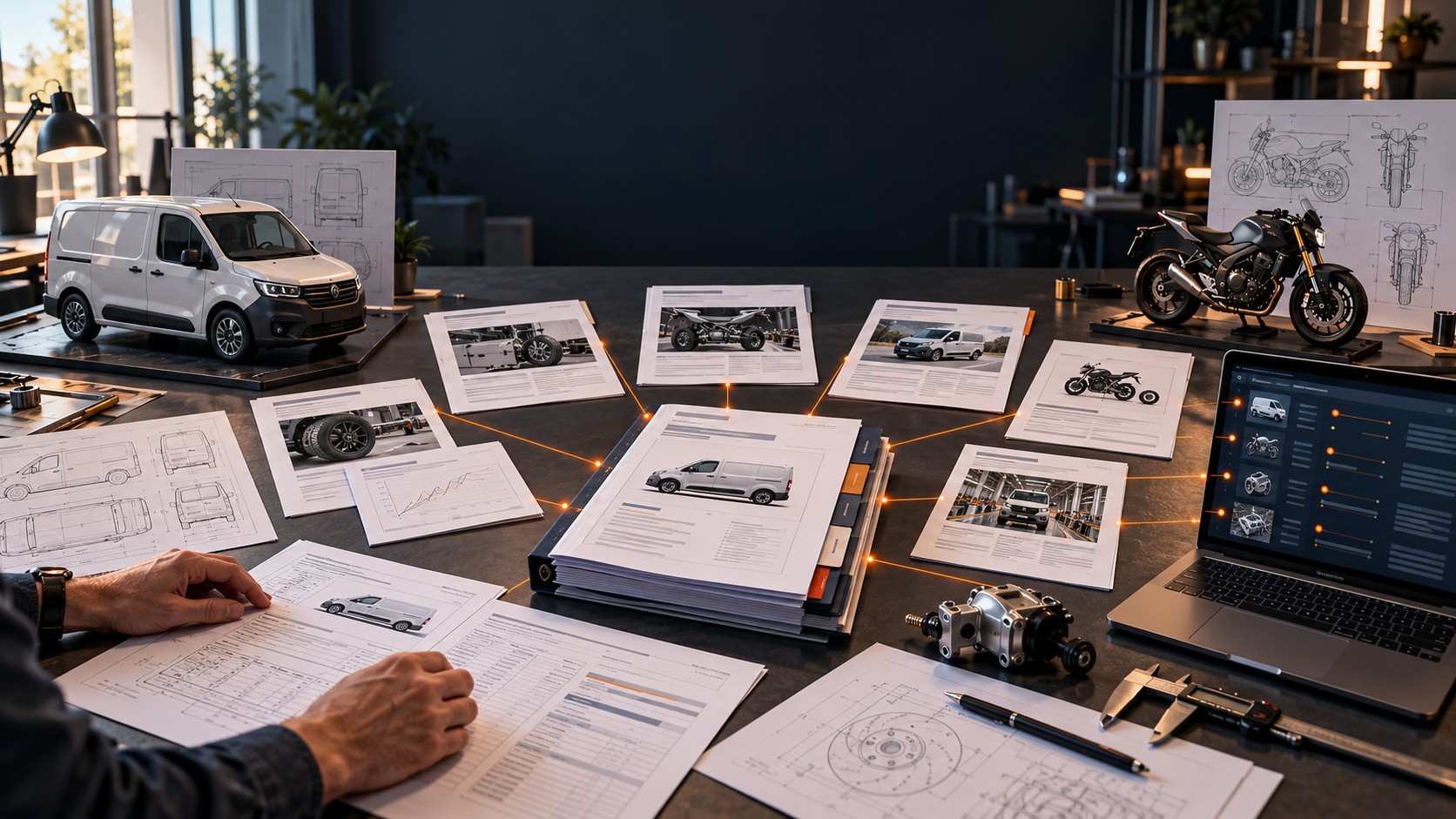
Turn a document collection into an evidence plan
What does each document actually demonstrate?
A supplier may provide an impressive folder of approvals, certificates, drawings and test reports. That gives the project a starting point.
The next step is to establish which documents support the proposed Australian vehicle, which requirements they address and where further work is needed.
Some existing component and UN ECE approvals can support an Australian VTA application, subject to the applicable requirements. Their usefulness depends on what they cover and how they are being relied upon. See the Department’s guidance on using other approvals.
Gather the documents you already hold and retain their original filenames, dates, revision references and attachments.
CHECKPOINT 04 / PRODUCTION
Plan for the vehicles that follow
How will production stay consistent?
How will the business know that later vehicles match the approved specification? Who will be told if the factory changes a supplier, component or manufacturing process?
Work through purchasing and component identification, production checks, inspection responsibilities, change control, defects and corrective action, and access to current manufacturer information.
The approval holder must implement an appropriate conformity of production system. Production consistency is an essential part of approval planning. See the current Department guide and its approval-condition appendices.
CHECKPOINT 05 / PROGRAMME
Build the programme before promising the date
Preparation and assessment are separate stages
A launch plan needs room for work before submission as well as the Department’s assessment.
Define scope → Review evidence → Resolve gaps → Finalise application → Assessment → Supply preparations
Assessment may involve requests for further information or inspection. Preparation, supplier responses and any necessary testing also need time in the programme. Read the current Guide to Vehicle Type Approvals.
SAVE THIS CHECKLIST
Your first-meeting preparation kit
You do not need every answer before speaking with us. Start with what you have.
- Company details and proposed business roles
- Vehicle specifications and photographs
- A model and variant list
- Existing approvals, reports and drawings
- Manufacturer contacts and agreements
- Production procedures and sample records
- Your target dates
Missing something? Identify it as missing. An honest gap list is more useful than an assumption that later proves incorrect.
Where experienced advice earns its place
Collecting documents is something your team can start today. Determining whether they support your proposed vehicle, variant range and Australian compliance position takes a more detailed review.
That is where the important questions emerge:
What can we use?
What needs clarification?
What needs testing?
What should we resolve before spending further?
ROVER Pro helps manufacturers and importers turn those questions into an agreed scope of work and a practical preparation plan.
We can assist with reviewing the approval pathway, defining the vehicle scope, organising evidence, identifying gaps and preparing the agreed application material.
General preparation guidance. The appropriate pathway, requirements and evidence depend on the vehicle and proposed business arrangements.


